

Hello, this is Global CPA. ✨✨
Today, I want to organize the reasons why I originally decided to start the ACCA journey.
While preparing for AFM recently, I kept asking myself:
“Why did I even decide to start another qualification?”
I already had professional certifications.
I already worked in accounting and audit.
So why continue studying again?
But whenever those thoughts appeared, I kept returning to the reasons that originally motivated me to begin ACCA.
Looking back, there were four major reasons:
- ACCA’s global reputation as an IFRS qualification
- The exemption benefits after passing USCPA
- The need to improve professional English writing skills
- The University of London MSc pathway
1. ACCA as a Global IFRS Qualification
Of course, KICPA is also based on IFRS, and there is absolutely no issue working in Korea with a Korean CPA license.
However, because I wanted the possibility of working internationally in the future, ACCA looked more globally recognized to me than KICPA.
Outside the United States, most countries use IFRS. And considering the possibility that IFRS and US GAAP may continue converging in the future, pursuing an international IFRS-focused qualification felt logical.
Technically, USCPA holders can also register in some IFRS countries through additional procedures. But to me:
“Being compatible with a system”
and
“Being part of that system”
felt very different.
That idea became one of the biggest reasons why I became interested in ACCA.
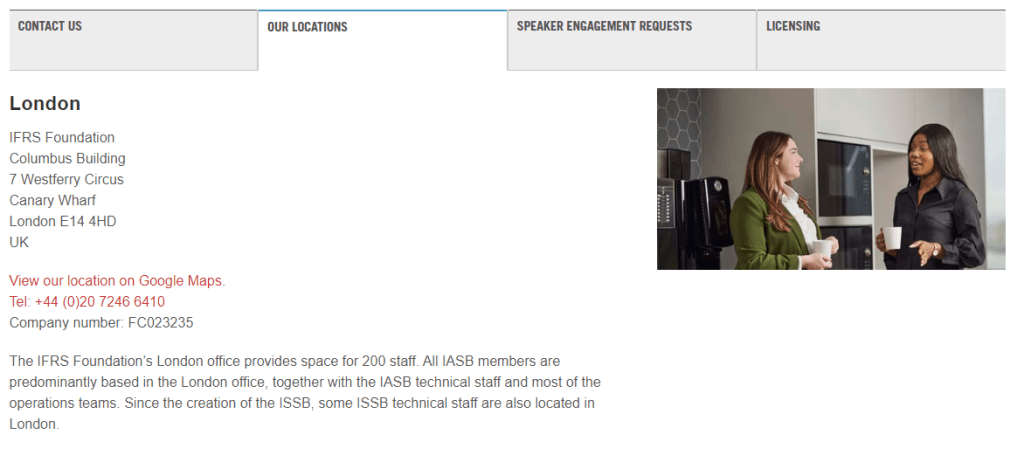
The IFRS Foundation headquarters is located in London.
Even after Brexit and various economic challenges, the UK still maintains enormous influence in the international accounting world.
In many ways:
- the United States represents the home of US GAAP,
- while the UK represents the historical center of IFRS.
Personally, I have always believed that if you want to truly understand something deeply, you should learn it from its original source.
That mindset naturally led me toward British accounting qualifications.
ACCA vs ICAEW vs ICAS
When researching UK accounting qualifications, I found three major organizations:
- ACCA
- ICAEW
- ICAS
My first impression was:
- ICAEW and ICAS felt more domestically focused,
- while ACCA felt designed to operate globally.
That global orientation made ACCA particularly attractive to me.
Compared with other UK accounting bodies, ACCA had:
- significantly larger international membership,
- wider global recognition,
- and stronger international presence.
The scale alone made me feel that ACCA had greater influence internationally.
| Category | ACCA | ICAEW | ICAS |
|---|---|---|---|
| Founded | 1904 | 1880 | 1854 |
| Region | Global | England & Wales | Scotland |
| Organization | ACCA (Association of Chartered Certified Accountants) | ICAEW (Institute of Chartered Accountants in England and Wales) | ICAS (Institute of Chartered Accountants of Scotland) |
| Registered Members (*) | 243,302 | 166,397 | 23,054 |
| Registered Students (*) | 437,952 | 36,084 | 4,103 |
| Qualification Requirements | 1) 13 examinations 2) 3 years of practical experience 3) Ethics and Professional Skills Module required | 1) 15 examinations 2) 450 days of practical experience 3) Continuing Professional Development required | 1) 13 examinations 2) 450 days of practical experience 3) Continuing Professional Development required |
| Characteristics | 1) Globally recognized qualification 2) Focus on broad accounting principles and business skills 3) Flexibility across various industries and roles | 1) Strong focus on public practice and audit 2) Specialized for England & Wales | 1) Focus on public practice and advisory services 2) Strong tradition and historical prestige 3) Emphasis on ethics and professionalism |
(*) Based on 2023 statistics
2. USCPA Exemptions
Honestly speaking, this was one of the most attractive parts of ACCA.
Passing the USCPA exam gives exemptions for up to 8 ACCA papers.
Many universities in countries like:
- Singapore,
- Malaysia,
- and the UK
also provide exemptions, but since I had already graduated from university, using my USCPA qualification as the exemption route was by far the most efficient option.
In fact, when I was deciding whether to pursue USCPA or ACCA first, one of the biggest reasons I chose USCPA first was this:
- USCPA → ACCA gives exemptions
- ACCA → USCPA gives no exemptions
That made the order feel obvious.
Even with exemptions, exemption fees still had to be paid for each subject, and the total cost was still significant.
But considering that those papers were essentially passed without additional study, it still felt worth it.
And honestly… having the Tax papers exempted felt amazing 😂
One interesting thing I learned during this process was that KICPA holders receive far fewer exemptions than I initially expected.
Even though KICPA is an extremely difficult qualification, ACCA only granted limited exemptions for it.
That made me realize something important:
Different accounting qualifications are viewed very differently internationally.
3. The Need to Improve Professional English Writing
I am a very typical Korean student who learned English mainly through Korean public education.
But if I truly wanted to work internationally someday, I realized something very important:
It would not be enough to simply speak English casually.
I would eventually need to:
- write reports,
- communicate with clients,
- prepare professional memos,
- and explain accounting issues professionally in English.
USCPA certainly involved English, but many parts — especially the old BEC writing section — felt relatively formulaic.
ACCA felt very different.
What attracted me most was ACCA’s emphasis on Professional Skills Marks and practical business writing.
The exam actually requires:
- reports,
- professional recommendations,
- business analysis,
- and structured communication.
That felt much closer to real professional work.
And to me, that was incredibly attractive.
Because if I was going to study English writing anyway,
why not:
- improve my professional communication,
- deepen my accounting knowledge,
- and earn another qualification at the same time?
That felt extremely efficient.
Honestly, I had not practiced structured writing seriously since preparing for university entrance essays years ago.
But while preparing for ACCA, I found myself studying:
- introductions,
- logical flow,
- supporting arguments,
- conclusions,
- and professional business tone again.
Surprisingly, while studying ACCA, I sometimes felt that my English writing ability improved even more than my accounting knowledge.
And I genuinely enjoyed that part.
4. The University of London MSc Pathway
The final major reason was the MSc in Professional Accountancy offered through the University of London.
I do not necessarily enjoy studying in general.
But I do enjoy going deeply into subjects that genuinely interest me.
And over time, while working in audit and accounting, I became increasingly interested in:
- accounting standards,
- audit standards,
- and academic research related to the profession.
I even started reading accounting research papers occasionally.
At some point, I found myself thinking:
“Maybe someday I should try writing a paper myself.”
Which honestly surprised me, considering how casually I approached my undergraduate thesis years ago.
The ACCA + University of London MSc pathway felt incredibly attractive because:
- completing ACCA,
- meeting the English requirement,
- and writing a dissertation
could eventually lead to a master’s degree.
Again:
one effort creating multiple outcomes.
That efficiency strongly appealed to me.
Of course, now that I am actually studying for these exams, I occasionally question whether this path is truly “efficient” considering the time, energy, and money involved.
But looking back, I also realize:
I started ACCA shortly after passing USCPA —
when motivation, adrenaline, and ambition were probably at their absolute peak.
So perhaps it makes sense after all 😂
Final Thoughts
Looking back, these were the four biggest reasons why I originally started ACCA.
Even now, while studying, there are definitely moments when I regret starting another difficult qualification.
But organizing these thoughts again reminded me that beginning this journey was still a meaningful decision.
I hope this article helps anyone currently considering ACCA or thinking about international accounting qualifications.
Thank you again for reading. ✨
 Global CPA
Leave a comment