

Hello Everyone, this is Global CPA✨✨
After my failed AFM attempt earlier in 2024, I realized something important:
The study methods that worked well for objective-style exams such as the USCPA were not necessarily effective for ACCA’s professional-level papers.
So when I started preparing again for:
- AAA,
- SBL,
- and AFM
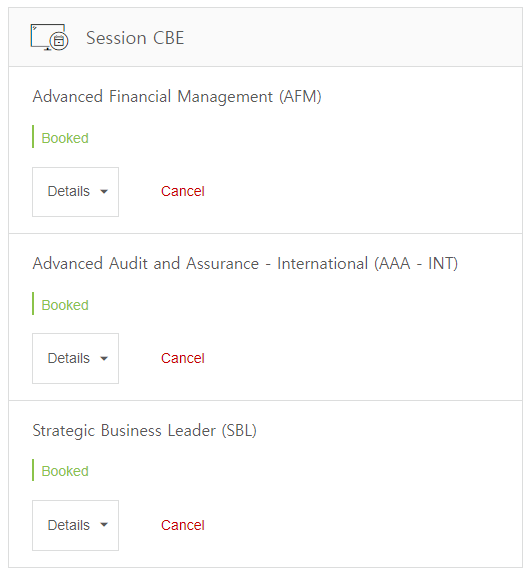
During the second half of the year, I completely changed my study approach.
In this post, I want to organize:
- what changed in my preparation strategy,
- which ACCA resources became most important,
- and what I found useful as a working professional with limited study time.
Why I Changed My Study Method Completely
Previously, my ACCA preparation strategy looked something like this:
- repeatedly reviewing condensed notes,
- focusing heavily on concept memorization,
- and solving only a limited number of past papers near the end.
That approach worked reasonably well for FR and SBR.
However, after failing AFM in June, I started asking myself a different question:
“How did I even pass SBR using that strategy?”
The more I reflected on it, the more I realized that ACCA professional-level exams are fundamentally different from:
- USCPA multiple-choice exams,
- or even traditional memorization-heavy study approaches.
ACCA P-level papers are much more focused on:
- application,
- professional judgment,
- structured communication,
- and understanding what the examiner actually wants.
So instead of obsessing over:
- note repetition counts,
- or passive concept review,
I shifted toward:
- past paper analysis,
- examiner expectations,
- technical articles,
- and exam technique itself.
| Topic | Previous Study Method | Current Study Method |
|---|---|---|
| Concept Study | Reviewed concepts through OpenTuition and became overly obsessed with repeatedly revising condensed handwritten notes | 1. Summarized Technical Articles and used condensed summary notes from YouTube instructors 2. Focused less on note repetition and more on understanding how concepts are actually applied in past paper questions |
| Technical Articles | Knew they existed but did not study them seriously | Repeatedly reviewed ACCA official Technical Articles and summarized important exam technique points into condensed notes |
| Syllabus | Did not check the syllabus carefully | Used YouTube instructors’ syllabus breakdowns to understand topic weighting and the likelihood of questions appearing in each section |
| Past Papers | Only solved the most recent past paper near the end of preparation | 1. Solved past papers early to understand exam structure first, then reviewed Examiner’s Reports to understand what examiners actually wanted 2. Solved four past papers from the 22/23 and 23/24 exam cycles |
| Read the Mind of the Marker (RTMM) | Did not even know the resource existed | Watched ACCA’s official RTMM sessions on YouTube and organized important marking points, scoring logic, and common mistakes |
| Attitude Toward English Grammar and Spelling | Approached the exam almost like an English proficiency test such as TOEFL | Realized ACCA is not a TOEFL exam. Adopted the mindset that even during KICPA exams, my grammar and spelling were probably far from perfect |
The Six Biggest Changes in My Study Strategy
1. Less Obsession With Repetition, More Focus on Application
Previously, I spent enormous amounts of time repeatedly reviewing handwritten summary notes.
This time, I focused more on:
“How are these concepts actually used inside past paper questions?”
That small shift changed everything.
Instead of treating concepts as isolated knowledge, I started connecting them directly to:
- requirements,
- exhibits,
- and marking logic.
2. Technical Articles Became Extremely Important (★★★★★)
Earlier in my ACCA journey, I barely touched ACCA Technical Articles.
That turned out to be a huge mistake.
This time, I read Technical Articles repeatedly and summarized important points directly into my notes.
What makes Technical Articles valuable is that they are not simply “theory explanations.”
They often explain:
- how concepts appear in exams,
- common misunderstandings,
- examiner expectations,
- and professional application.
In many ways, they feel like conversations with the examiner.
3. Past Papers Became the Core of Preparation (★★★★★)
This was probably the biggest difference.
Instead of leaving past papers for the very end, I started with them much earlier.
My process became:
- Attempt the past paper
- Read the Examiner’s Report carefully
- Analyze how marks were awarded
- Identify weak areas
- Repeat
For AAA specifically, I solved around four past papers and reviewed YouTube debrief lectures afterward to identify:
- missing discussion points,
- weak professional judgment,
- and poor answer structure.
Compared to my earlier AFM attempt, this felt dramatically more effective.
4. “Read the Mind of the Marker” Changed My Perspective (★★★★★)
One ACCA resource that genuinely changed my mindset was the official:
“Read the Mind of the Marker” (RTMM)
series uploaded by ACCA.
Before discovering these materials, I honestly had no idea:
- how professional marks worked,
- how many points were expected per requirement,
- or how markers interpreted answers.
Coming from KICPA and USCPA backgrounds, the entire idea of “professional marks” initially felt almost alien to me.
But after watching RTMM webinars, the exam suddenly started feeling much more manageable.
For the first time, I felt:
“This is difficult, but not impossible.”
5. Webinar-Based Learning Became Surprisingly Useful (★★★★☆)
Another major change was how heavily I started relying on webinars and YouTube instructors.
Some instructors I found especially useful included:
- AAA → Ben Wilson
- SBL → Hassan Dossani
- AFM → Andrew Mower
Before fully starting each subject, I watched syllabus explanation webinars to understand:
- which topics were heavily weighted,
- what examiners prioritized,
- and how candidates should approach different sections.
That alone made studying much more efficient.
6. Using ChatGPT to Improve Study Efficiency (★★★☆☆)
One of the more interesting things I experimented with this time was using ChatGPT to improve efficiency.
Since many webinars were over an hour long, I started using AI tools to:
- summarize webinar scripts,
- organize key concepts,
- extract major discussion points,
- and create condensed notes.
My workflow was roughly:
- Extract YouTube webinar scripts
- Summarize them using ChatGPT
- Review important sections manually
- Add useful points into summary notes
As someone balancing:
- work,
- ACCA,
- and daily responsibilities,
this saved an enormous amount of time.
WhatsApp Communities and Global ACCA Culture (★★☆☆☆)
Another interesting part of ACCA preparation was joining international WhatsApp study groups.
Because ACCA has such a large international student base — especially in:
- India,
- Pakistan,
- the Middle East,
- and Africa —
these groups become surprisingly active.
Students share:
- study materials,
- exam discussions,
- technical explanations,
- and motivation.
For someone preparing for ACCA in Korea, this was actually fascinating because it made me realize how global the ACCA ecosystem truly is.
At the same time, I also learned an important lesson:
Leave the group chats about one week before the exam.
Otherwise, seeing endless discussions like:
- “This topic is definitely coming,”
- “That lecturer said this area is critical,”
can seriously damage your mental stability before the exam.
My Biggest Realization
Looking back, I think the biggest lesson from this period was this:
ACCA is not an English test.
And it is not a memorization test either.
Of course:
- communication matters,
- structure matters,
- and professional writing matters.
But the exam is ultimately testing:
- application,
- professional judgment,
- and whether you can communicate accounting ideas clearly enough to earn marks.
Once I stopped obsessing over:
- perfect grammar,
- perfect spelling,
- and unrealistic note repetition,
my study process became much more practical and manageable.
Final Thoughts
I still do not know yet whether all of these strategies will produce perfect exam results.
But I can confidently say this:
Compared to my failed AFM preparation earlier in the year, this approach felt far more effective and sustainable.
As a working professional with limited study time, I think learning:
- how ACCA exams are actually structured,
- how examiners think,
- and how marks are awarded
is just as important as learning the technical concepts themselves.
In the next posts, I will probably share more detailed reflections on:
- AAA,
- SBL,
- and AFM
individually.
Thank you for reading.
 Global CPA
Leave a comment